



“In loco parentis” = in the place of a parent
(But it’s being used for educational bureaucratic overreach)
Sharon Sedlar | May 20, 2026

Throughout history and law, this truth remains clear: parents are the primary advocates for their children. Courts in the United States have consistently affirmed that parents hold a fundamental right to direct the upbringing and education of their children.
In Pennsylvania, this principle is being tested through ongoing legal challenges involving Commonwealth Charter Academy (CCA) – the state’s largest cyber charter school. In 2025, several school districts filed a lawsuit against CCA and the Pennsylvania Department of Education, asking the court to take significant steps, including revoking the school’s charter and relieving districts from paying tuition for students who have chosen to enroll.
For families, this case represents far more than a dispute over funding or oversight. It raises a fundamental question: Who decides what educational environment is right for a child?
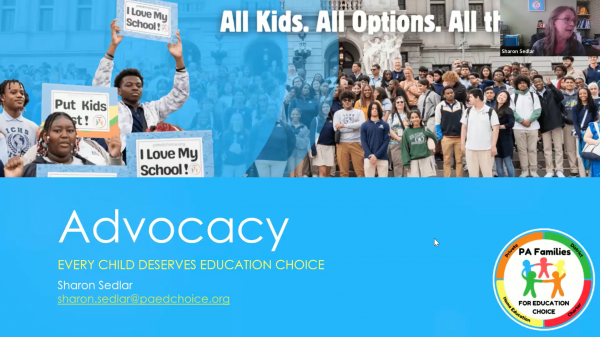
To ensure families’ voices were heard, PA Families for Education Choice (PaFEC) filed an amicus brief – bringing parents directly into the legal conversation; voices that had not been included in the original filing, yet are central to the issue at hand.
The Heart of the Concern
At the heart of PaFEC’s argument lies a concern that resonates deeply with parents across Pennsylvania. Schools are entrusted with the care and education of children during the school day — but that trust does not replace the authority or responsibility of parents. The doctrine of in loco parentis, now being invoked by districts in the lawsuit against CCA, was never intended (in our layperson view) to grant schools the power to act in place of parents. Its purpose is supportive, not substitutive: to allow educators to assist children within the bounds of parental oversight.
Using this doctrine to justify legal action distorts its meaning — shifting from partnership to overreach.
PaFEC stands firmly against that erosion of parental agency. We believe that families must remain at the center of educational decisions. Our advocacy ensures that parents’ voices are not only heard but respected – especially when self-serving interpretations threaten to redefine their role in their children’s education.
Our Commitment
PaFEC takes its entrusted role seriously. We give voice to families who feel unheard and monitor circumstances where parental agency is in danger, and where students are adversely affected. We will continue to ensure parents remain at the center of decisions that shape their children’s education.